Your Next Fans Might Be Playing a Different Sport
outh sports have long been a natural starting point for group ticket sales. Find a league, connect with a coach, organize a team outing.
But how often do we look beyond the youth organizations that play our sport?
An emerging tennis program could become a basketball team’s next community partner. A junior golf league could introduce new families to a baseball club. A flag football organization could find a home at a hockey game.
The opportunity starts with understanding where kids are playing—and giving them a reason to connect.
Follow the participation
In an October 27 article, Project Play’s Jon Solomon examines new youth sports participation data, highlighting substantial gains in tennis and golf.
Between 2019 and 2025, regular tennis participation increased 72% among children ages 6–12 and 46% among teens ages 13–17. Flag football grew 26% among younger children over that same period, while teen participation remained flat. These are six-year changes, rather than single-year jumps.
For ticket sales teams, those trends suggest a question worth asking: Does your youth sports outreach reflect the organizations growing in your community?
Start locally. Ask parks and recreation departments, school athletic directors, and facility operators which programs are adding participants, opening locations, or building waitlists. National trends can point you toward an opportunity; local conversations can tell you whether it exists in your market.
Build around what young athletes share
A young tennis player doesn’t need to play basketball to appreciate the preparation behind a professional player’s performance.
That shared experience offers a starting point: practice, teamwork, competition, resilience, and the excitement of watching someone perform at a high level.
Consider inviting several organizations to a Young Athletes Night. A junior golf program, swim club, volleyball league, and flag football team could each receive recognition while attending the same game.
Give the visit something specific to connect with: a conversation about handling pressure, a look at warmups, or a short video featuring a player discussing how they prepare.
The invitation becomes more meaningful when it recognizes something about the child receiving it.
Give the organization a reason to participate
“Bring your families to our game” asks a youth program to help sell tickets. A stronger partnership starts by asking what would help that program.
Does it need equipment? Scholarship funding? Recognition for volunteer coaches? An affordable way to celebrate the end of a season?
Build the offer around that answer.
A junior tennis program might welcome a fundraiser supporting beginner equipment. A flag football league might value a coach appreciation outing. A volleyball club could use a game as its season celebration, with families seated together and athletes recognized on the videoboard.
Give each organization a dedicated purchase link, clear instructions, and a contact who can answer questions. Make the organizer’s role manageable.
Then build on what resonates.
Make the first visit lead somewhere
A child can enjoy a group outing without forming a lasting connection to the team. Plan the next invitation before the first visit happens.
For families who opt in, follow up with a useful reason to return: another family game, a school-break event, or an opportunity connected to something they enjoyed during their visit.
Ask the organizer what worked, too. Was the start time practical? Could families sit together? Did the recognition feel special? Would they come again?
Track tickets and revenue, but also measure first-time households, return purchases, and organizations that book another outing. Those signals help distinguish a successful sales night from a developing fan relationship.
Keep the invitation within reach
Project Play also reports that sports participation fell among children ages 6–12 in households earning $25,000 or less during 2025, even as participation grew in higher-income groups.
That finding should shape outreach. Include recreation programs and community organizations alongside travel clubs. Consider sponsor-supported tickets, clear total pricing, and transportation partnerships where feasible.
An approach centered only on established youth programs can miss children who face barriers to joining them.
The goal is to make more families feel welcome—and give them an experience worth repeating.
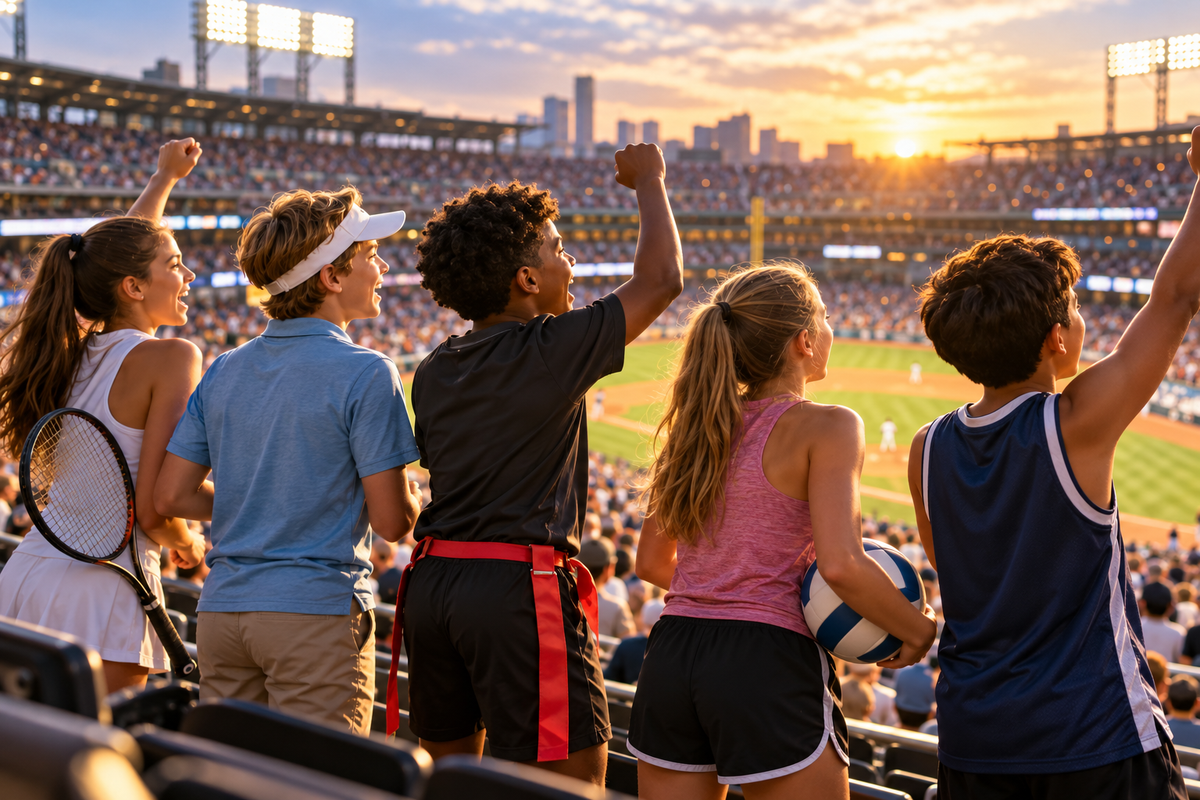
Your next fan might arrive carrying a tennis racquet, wearing a volleyball jersey, or coming straight from a golf lesson.
The connection begins when your team gives them a reason to feel they belong.