Discussion Replay: Wait... THAT could be a theme night? (April 8, 2026)
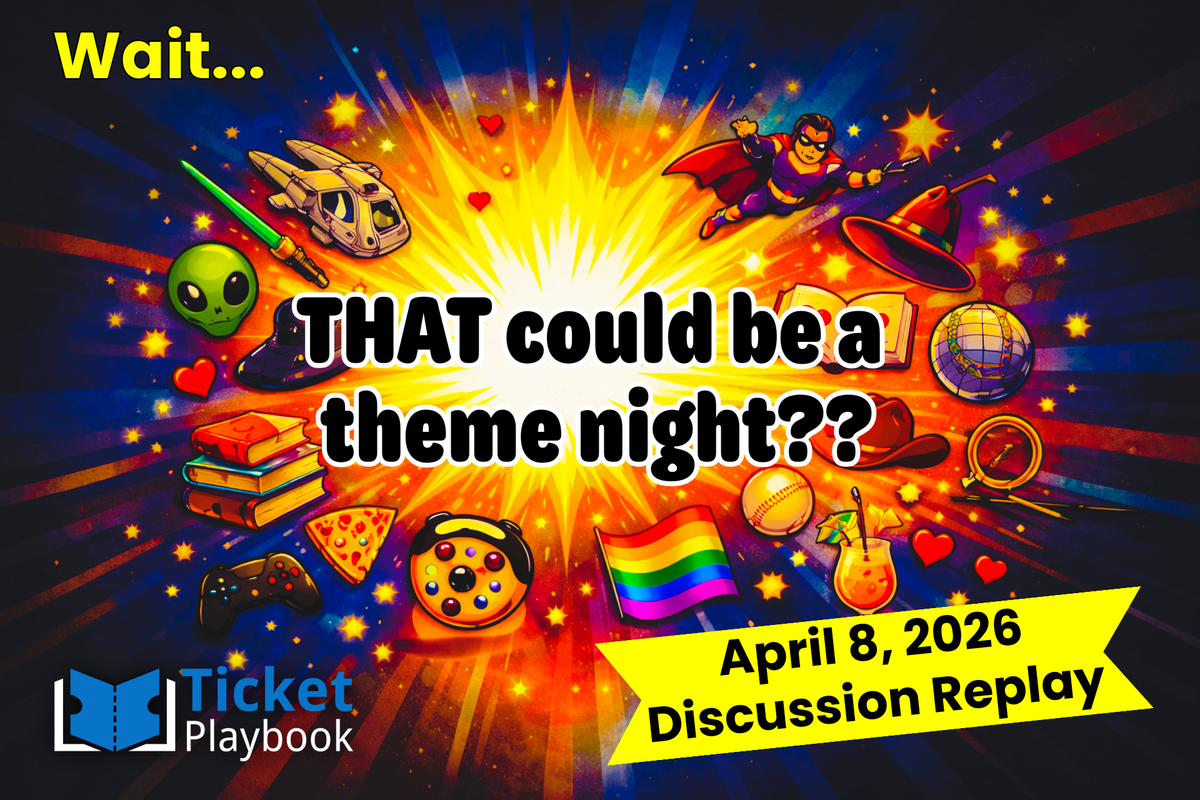
Theme nights have always been a staple of sports attendance, but the most forward-thinking teams are pushing well past the usual giveaway table. The best promotions now treat the entire fan experience as a canvas, driving meaningful new fan attendance and building the kind of memories that turn casual visitors into lifelong regulars.
Making the Purchase Experience Part of the Theme
The best theme nights no longer begin at the turnstile. Teams leaning into immersive concepts are extending the creative vision into the ticket-buying interface itself, turning a transactional moment into the first touchpoint of the story. A dinosaur-themed night becomes far more compelling when the purchase screen reflects that world visually and tonally, and retro 90s nights have benefited from design choices that signal nostalgia before a single fan arrives. When the aesthetic commitment is evident from the first click, it primes attendees for something genuinely worth showing up for.
Tapping Fandoms That Have Never Considered Minor League Sports
Some of the most dramatic attendance results have come from events built around communities with no obvious connection to the sport. Sports romance book fairs have generated 600 ticket sales per event in some cases, with over 75 percent of buyers brand new to the team's database. A partnership night at an NBA team themed around the fantasy novel Fourth Wing pushed further still, driving around 1,500 tickets at roughly 80 percent new fans. The data makes the case clearly: the most powerful audience is often one the team has never previously reached.
Original Concepts vs. Licensed IP and Why Originality Wins
Licensed intellectual property carries obvious name recognition, but it also comes with approvals, restrictions, and fees that constrain what teams can actually execute. Original, unlicensed concepts give creative teams genuine latitude. One standout example: a "farewell to the penny" night built around the coin's real-world discontinuation. An Abraham Lincoln look-a-like is throwing out the ceremonial first pitch, fans will compete in a pennies-in-a-jar guessing contest, a pre-game eulogy to be delivered, and a penny buried in the outfield with a miniature tombstone. No approval process — just a cohesive, memorable night fans talked about for months. Where licensed brands are the goal, creative workarounds like Pokemon card trading events have allowed teams to tap collector communities without triggering IP complications.
Crossover Nights and the Power of Shared Affinities
Organizations with shared ownership across multiple franchises hold an underutilized asset: the ability to cross-pollinate fan bases. The Sacramento River Cats and Kings, and the Colorado Rapids and Nuggets, represent natural crossover opportunities where loyalty from one sport can be activated for another. Local brands and civic events offer a parallel path — tying a promotion to a nearby rodeo, for instance, captures a Wild West audience that might never attend a game otherwise. The broader principle, sometimes called the "Target crossover" model, is straightforward: identify what people who don't currently attend already love, then build the night around that.
Races, Runs, and the Fitness Fandom Opportunity
Pairing 5K and 10K races with ticket vouchers has proven to be a reliable acquisition engine, with teams like the Indianapolis Colts formalizing the model. Partnering with established race operators like RunSignup removes logistical complexity while delivering a pre-built participant community. The emerging opportunity lies further afield: HYROX-style fitness events and youth bike races bring audiences with strong communal bonds and a well-documented habit of attending organized experiences together.
Taking the Game Somewhere Extraordinary
No promotion cuts through quite like changing the venue entirely. The Joliet Slammers will play a game inside the Old Joliet Prison — a historic former correctional facility. This stands as a model for what becomes possible when a team is willing to operate well outside its comfort zone. These events generate press coverage and social sharing that no in-stadium giveaway can replicate. For fans who attend, the experience transcends a game; it becomes a story told for years. For organizations willing to invest in the logistics, extraordinary venues offer the one thing the standard playbook simply cannot: a once-in-a-generation memory.